In our latest Institutional Credit Review, Cognitive Credit AI delivers a deep-dive analysis of Wagamama (Holdings) Ltd following last year's corporate restructuring by Apollo Global Management. We examine the business's performance and financial health navigating key themes such as operational unit economics, structural complexity, peer comparison and investment view summary — as always through the lens of a credit investor.
Credit Scorecard
|
Dimension
|
Assessment
|
Rationale
|
|
Business Risk
|
Medium
|
Leading UK casual dining brand with scale advantages, but exposed to discretionary consumer spending and structural labour cost inflation
|
|
Financial Risk
|
High
|
FY25 net leverage of 6.47x, interest coverage of 2.38x, and negative FCF (-£15.0m) leave minimal margin for error
|
|
Liquidity
|
Adequate
|
£8.9m cash + £41.9m undrawn RCF provides near-term coverage, but thin relative to fixed charges; no near-term maturities
|
|
Leverage Trajectory
|
Improving (tentative)
|
LFL recovery in Q2 FY26 and cost savings programme provide a path to EBITDA improvement, but FCF remains negative
|
|
Covenant Risk
|
Low-to-Medium
|
Springing RCF net leverage covenant (8.3x threshold); management confirms compliance through May 2027 but references working capital management as a mitigating lever
|
|
Refi Risk (24–36m)
|
Low
|
Bond matures June 2030; no near-term refinancing requirement
|
|
Recovery Profile
|
Medium
|
Senior secured with broad collateral package, but super senior RCF ranks ahead; intercompany receivable complexity and brand-dependent liquidation value create uncertainty
|
|
Key Downside Indicators to Monitor
|
(1) LFL sales trajectory (monthly/quarterly); (2) RCF utilisation level; (3) Any covenant amendment or waiver request
|
|
Business Overview
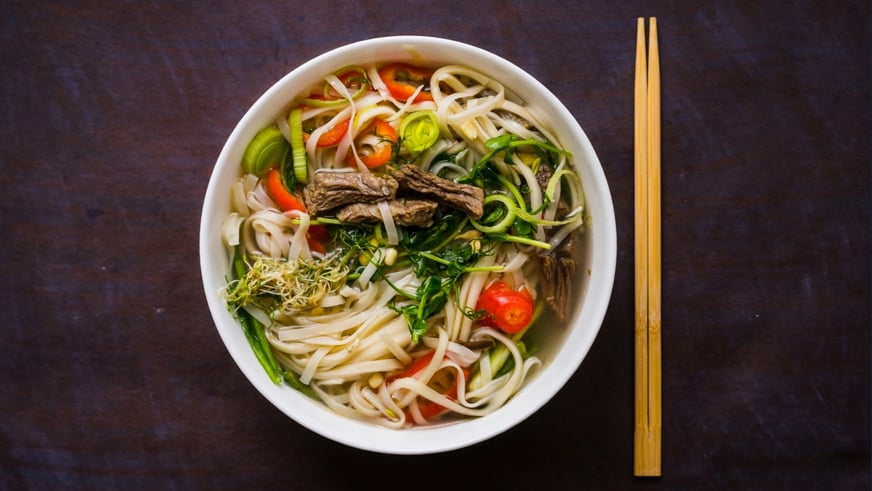
Wagamama is the United Kingdom's leading pan-Asian casual dining operator, offering a menu centred on Japanese-inspired noodle and rice dishes served in a communal, canteen-style format. As of 29 December 2025 (FY25 year-end), the group operated 165 company-owned restaurants in the UK, 7 in the United States, and 52 franchise sites across 18 international markets, for a total network of approximately 224 locations.
Revenue is generated primarily through company-operated restaurant sales (~96% of total), with a small but growing franchise fee stream (£4.2m in FY25). The brand competes in the UK casual dining segment, a market characterised by moderate barriers to entry, high consumer price sensitivity, and intense competition from both branded chains and independent operators. Wagamama's competitive advantages are brand recognition, scale-driven purchasing efficiency, and a differentiated pan-Asian positioning that has historically commanded above-average consumer loyalty relative to the broader casual dining peer set.
The business was acquired by Apollo Global Management in December 2023 as part of its take-private of The Restaurant Group plc (TRG). A significant corporate restructuring and refinancing was completed in January 2025, legally separating the Wagamama division from TRG's other businesses (Brunning & Price, Concessions) and establishing a standalone debt structure.
Revenue Model & Operating Drivers
Revenue Inputs: Revenue is driven by three primary levers: (i) restaurant count (volume), (ii) covers per restaurant (traffic), and (iii) average spend per head (ASPH, a price/mix variable). Delivery via third-party aggregators (Deliveroo, Just Eat, and an expanding Uber Eats partnership) represents a growing sub-channel within the dine-in/delivery mix.
FY25 Performance: Total revenue was £480.5m, down 4.2% year-on-year from £501.5m in FY24. The primary driver of the decline was the transfer of airport concession sites to the TRG Concessions business, which accounted for £28.2m of the revenue reduction. On a like-for-like (LFL) basis, FY25 sales declined -1.7%, reflecting deliberate investment in value proposition (price reductions and promotions) that increased covers but compressed ASPH. The UK casual dining market declined approximately -1% on a total LFL basis (inclusive of delivery) and approximately -2% on a dine-in-only basis in 2025, suggesting Wagamama broadly tracked the market.
Q1 FY26 Update: Q1 26 total sales were £118.8m (vs. £119.5m in Q1 25), with total LFL of -0.5% but dine-in LFL turning positive at +0.1%. Q2 26 to date shows dine-in LFL of +4.0%, with management citing volume growth of +6% and early signs of ASPH recovery. This is a meaningful inflection signal.
Structural vs. Cyclical Drivers:
- Structural: The shift toward delivery and digital ordering is structural and margin-dilutive at the restaurant level (aggregator commissions). The airport site transfer is a permanent revenue reduction. The US expansion is a structural growth option but currently loss-making (c.£5m loss in FY25).
- Cyclical: The ASPH compression in FY25 reflects a deliberate value reset in a consumer-pressured environment. The recovery in dine-in volumes in Q1–Q2 FY26 is consistent with a cyclical normalisation as real wages recover and interest rate cuts filter through to consumer confidence.
Seasonality: The business exhibits modest seasonality, with Q3 (summer) and Q4 (Christmas/New Year) typically the strongest quarters by revenue and EBITDA contribution.
Customer Stickiness: No formal contract structure exists with end consumers. Loyalty programmes and brand equity provide soft stickiness, but the business is inherently transactional and exposed to discretionary spending cycles.
Cost Structure & Operating Leverage
Cost of Sales: Cost of sales in FY25 was £391.8m, yielding a gross profit of £88.7m. The cost base is dominated by:
- Labour: Staff costs of £190.0m in FY25 (wages/salaries £170.4m, social security £16.8m, pension £2.75m), representing the single largest cost line. Labour is predominantly fixed in the short term (minimum staffing requirements per site) but variable over the medium term through headcount management.
- Food & Beverage: A material but undisclosed proportion of cost of sales. Inventory days of approximately 3.5 days confirm rapid stock turnover consistent with a fresh-food model.
- Energy: 96% of energy volume for 2026 has been fixed through longer-term contracts, providing near-term cost certainty.
- Rent/Leases: Lease payments are a significant fixed charge. The EBITDA bridge includes a rent adjustment of approximately £7.5–7.9m per quarter (pre-IFRS 16 basis), reflecting the cash cost of occupancy.
Operating Leverage: The business exhibits high operating leverage because the majority of the cost base (rent, minimum labour, utilities) is fixed at the site level. A 1% decline in LFL revenue therefore has a disproportionate impact on EBITDA. The FY25 Reported EBITDA margin (post-IFRS 16) of 12.8% compares to 14.3% in FY24, illustrating margin sensitivity to revenue headwinds combined with wage inflation (National Minimum Wage and employer National Insurance Contribution increases effective April 2025).
Administrative Expenses: Administrative expenses before exceptionals were £42.8m (FY25), with a TRG Group head office allocation recharge of approximately £5.7m per quarter now replaced by a standalone cost structure post-separation.
Unit Economics & Cash Generation
Gross Margin: FY25 gross margin was 18.5%. This is notably lower than pub/bar peers (Greene King: 73.4%; Marston's: 76.3%) because Wagamama reports cost of sales inclusive of labour, unlike many comparators that report food cost only as cost of sales. The metric is therefore not directly comparable across the peer set.
EBITDA Margin: FY25 Adjusted EBITDA margin (post-IFRS 16) was 17.3% (-10bps YoY). The LTM pro forma Adjusted EBITDA (post-IFRS 16) cited in the Q1 26 presentation was £76.7m.
EBITDA–Cash Conversion: Cash generated from operations was £64.8m in FY25 (vs. £74.5m in FY24), implying reasonable cash conversion from Derived EBITDA of £79.3m. However, after interest paid (£35.0m in FY25, reflecting the new bond coupon from January 2025 onwards) and lease repayments (£17.7m), net operating cash flow was £30.0m. Free Cash Flow (FCF) was -£15.0m (FY25), reflecting the step-up in interest costs following the January 2025 refinancing.
Capex: Gross Capex was £27.2m (FY25), representing 5.7% of sales. The Capex/D&A ratio of 0.81x suggests maintenance-level investment with modest growth spending. Management guided six new UK restaurant openings in FY26 and five in FY27.
Working Capital: The business benefits from a structurally negative working capital position (net working capital of -£57.4m, FY25), typical of restaurant operators who collect cash at point of sale but pay suppliers on extended terms (accounts payable days of approximately 189 days, FY25). This provides a natural liquidity buffer in growth phases but can become a cash drain in contraction.
Interest Coverage: FY25 EBITDA interest coverage ratio was 2.38x, a material deterioration from 7.8x in FY24, driven entirely by the step-up in cash interest following the £330m bond issuance at 8.50% in January 2025. Fixed charge coverage was 0.71x, below 1.0x, reflecting the weight of lease obligations in the fixed charge base.
This extract is from our Institutional Credit Review of Wagamama.
To download the full review including Peer Comparison, Valuation, Key Risks, Investment View Summary and Credit Scorecard, submit your details below.
Disclaimer: This review was produced by Cognitive Credit AI and is based on Wagamama's official reporting and Cognitive Credit's curated data. It is intended for institutional credit analysis purposes only and does not constitute investment advice.


 8 min read
 4 min read