Life Sciences Tools & Services — Institutional Credit Industry Review
Written by

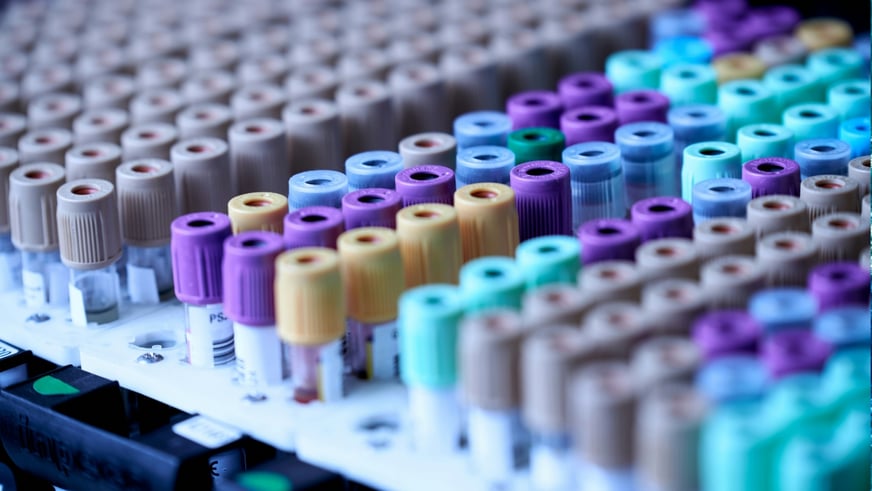
Our latest review examines the Life Sciences Tools & Services sector following a wave of new issuance in the space. As pandemic-driven tailwinds fade, Cognitive Credit AI analyzes inventory destocking, shifting biopharma spending, and leverage trajectories to see which top-tier names are best positioned to defend margins in this evolving landscape.
Universe Note
Active (non-retired) companies in the Cognitive Credit database for this sub-industry: Agilent, Biofarma, Biogroup, Bio-Rad, Capsugel, Charles River Laboratories, Clarivate, Eurofins, Fortrea, ICON, IQVIA, Maravai LifeSciences, Neogen, Revvity (formerly PerkinElmer), Royalty Pharma, Tempus AI, Thermo Fisher Scientific, Waters. Royalty Pharma and Tempus AI are excluded from the core analysis given their materially different business models (royalty financing and artificial intelligence-driven precision medicine, respectively).
1. Industry Definition & Value Chain
Life Sciences Tools & Services encompasses companies that enable the drug discovery, development, and production continuum. These are the "picks and shovels" providers to the pharmaceutical, biotechnology, academic, and industrial research sectors. The sub-industry is best understood through four major subsegments:
Major Subsegments & Key Players
A. Analytical Instruments & Laboratory Equipment (STRUCTURAL profit pool) Manufacturers of high-precision instruments — chromatography, mass spectrometry, spectroscopy, flow cytometry — used in research, quality control, and diagnostics. Profit pools are concentrated in the instrument itself (hardware margin) and, critically, in the high-margin aftermarket of consumables, reagents, and service contracts.
- Key Players: Thermo Fisher Scientific (TMO), Agilent (A), Waters (WAT), Bio-Rad (BIO), Revvity/PerkinElmer (RVTY)
- Economics: Instruments are often sold at moderate margins to build installed base; consumables and service contracts (recurring) carry gross margins of 50–70%+. The "razor-and-blade" model creates durable, high-visibility revenue streams.
B. Contract Research Organisations (CROs) / Clinical Research Services (CYCLICAL with structural growth) Outsourced drug development services spanning preclinical safety assessment, clinical trial management, data analytics, and regulatory affairs. Revenue is project-based with multi-year contracts, creating backlog visibility but also cancellation risk.
- Key Players: IQVIA (IQV), ICON (ICLR), Charles River Laboratories (CRL), Fortrea (FTRE)
- Economics: Labour-intensive, relatively asset-light. EBITDA margins typically 20–25% (adjusted). Revenue recognition is milestone/time-based, creating lumpiness. Backlog is a key leading indicator but not a guarantee of revenue.
C. Contract Development & Manufacturing Organisations (CDMOs) / Biopharma Services (STRUCTURAL) Outsourced drug substance and drug product manufacturing, including biologics, cell and gene therapy, and small molecules. Thermo Fisher's Laboratory Products & Biopharma Services segment (~54% of FY25 revenue at ~$24.0bn) is the dominant player in this space globally.
- Key Players: Thermo Fisher Scientific (TMO — dominant), Capsugel (dosage form manufacturing), Biofarma
- Economics: Capital-intensive relative to CROs. Long-term supply agreements provide revenue durability. Margins are lower than instruments but cash flows are more predictable.
D. Testing & Diagnostic Services / Laboratory Networks (STRUCTURAL with defensive characteristics) Independent testing laboratories providing food safety, environmental, clinical, and pharmaceutical testing services. Revenue is highly recurring and volume-driven.
- Key Players: Eurofins (ERFFP), Biogroup (BIOGRP), Neogen (NEOG)
- Economics: High fixed-cost base (laboratory infrastructure) creates operating leverage. Regulation is the single largest demand driver — a structural, non-discretionary tailwind.
Value Chain Summary: Raw material/reagent suppliers → Instrument/consumable manufacturers → CROs/CDMOs (drug development & manufacturing) → Testing/QC services → End customers (pharma, biotech, academic, industrial). Profit pools are highest in instruments/consumables (STRUCTURAL, high IP) and in specialised CRO/CDMO niches. Commodity testing is lower-margin but highly recurring.
Recessionary Behaviour: The industry is more resilient than most. Pharmaceutical R&D budgets are relatively sticky (driven by patent cliff pressures and pipeline obligations), and regulatory-driven testing is non-discretionary. However, early-stage biotech funding is highly sensitive to capital market conditions, creating a CYCLICAL overlay on an otherwise defensive base.
2. Market Size, Growth & Cyclicality
Global Market Size: The total addressable market for life sciences tools and services is estimated at >$200 billion (including instruments, CRO/CDMO services, and testing). IQVIA estimates the outsourced R&D segment alone at ~$75 billion (FY25), up from ~$32 billion in FY18 — a ~10% CAGR. The broader life sciences industry generating demand for these services is estimated at ~$1.94 trillion (FY25, per IQVIA disclosures).
Historical Growth vs. GDP: The industry has consistently grown at 1.5–3x nominal GDP, driven by secular increases in pharmaceutical R&D spending, regulatory complexity, and outsourcing penetration. The COVID-19 pandemic created a sharp, temporary spike (FY21–FY22) followed by a normalisation trough (FY23–FY24), particularly visible in Thermo Fisher's Life Sciences Solutions segment (revenue fell from $15.6bn in FY21 to $10.4bn in FY25 as COVID-related demand unwound).
Cyclicality Profile: The industry is predominantly defensive with a CYCLICAL overlay:-
- STRUCTURAL (defensive): Regulatory-driven testing (Eurofins, Neogen), CDMO manufacturing (Thermo Fisher), instrument consumables/service (Agilent, Waters)
- CYCLICAL: Early-stage CRO demand (Charles River DSA), biotech-funded instrument purchases, academic/government spending (subject to budget cycles)
- STRUCTURAL (defensive): Regulatory-driven testing (Eurofins, Neogen), CDMO manufacturing (Thermo Fisher), instrument consumables/service (Agilent, Waters)
-
- STRUCTURAL: Ageing global population; rising chronic disease burden; increasing regulatory complexity; pharmaceutical patent cliffs driving R&D reinvestment; outsourcing penetration (estimated at ~50–55% of pharma R&D, with room to grow); biologics/cell & gene therapy complexity requiring specialised tools
- CYCLICAL: Biotech venture capital and IPO funding cycles; large pharma restructuring and pipeline reprioritisation; academic government budget cycles; macroeconomic interest rate environment (affects small biotech cost of capital)
3. Revenue & Cost Drivers
Primary Revenue Drivers
- Instrument installed base growth (STRUCTURAL): Each new instrument placed generates a multi-year tail of consumables and service revenue. Agilent's CrossLab segment and Waters' chemistry consumables exemplify this.
- Pharmaceutical R&D spending (STRUCTURAL/CYCLICAL): The primary demand signal for CROs and CDMOs. Large pharma R&D budgets are relatively stable; small/mid biotech is highly variable.
- Regulatory mandates (STRUCTURAL): Food safety (EU, US FSMA), environmental testing, pharmaceutical quality control — all non-discretionary.
- Outsourcing penetration (STRUCTURAL): Pharma companies continue to externalise non-core activities to improve capital efficiency.
Pricing Power
- Instruments/consumables: Strong pricing power due to high switching costs, proprietary reagent/column chemistry, and regulatory validation requirements. Price increases of 3–5% annually are typical in normalised environments.
- CRO/CDMO services: Moderate pricing power; competitive bidding on new contracts but long-term relationships and switching costs provide some protection. Inflationary cost pass-through is typically lagged 6–18 months due to fixed-price contract structures.
- Testing services: Moderate; pricing is volume-driven with some regulatory floor. Eurofins has demonstrated the ability to pass through inflation via surcharges.
Major Cost Inputs
- Labour (largest cost, 40–60% of revenue for CROs/testing): Highly skilled scientific staff; wage inflation is a persistent headwind. CYCLICAL in intensity but STRUCTURAL in direction.
- Raw materials/reagents: Relevant for instrument manufacturers and CDMOs. Supply chain disruptions (FY21–FY22) created temporary margin pressure.
- Capital equipment depreciation: Significant for testing networks (Eurofins capex/sales ~11%) and CDMOs.
- Facility costs: Laboratories and manufacturing sites carry high fixed costs, creating operating leverage — both positive and negative.
Operating Leverage
- Instrument manufacturers and testing networks have high fixed-cost bases — revenue growth above ~3–5% drops through at high incremental margins. Conversely, revenue declines are painful (see Charles River's margin compression in FY23–FY25 as biotech demand softened).
- CROs are more variable-cost (labour can be scaled), but have minimum fixed infrastructure costs.
4. Competitive Landscape
Market Concentration
The industry is moderately concentrated at the top, fragmented in the middle. Thermo Fisher Scientific is the undisputed global leader with $45.2bn in FY25 revenue — approximately 6x the size of the next largest instrument/tools player in this universe. IQVIA ($16.6bn LTM revenue) dominates the CRO/data analytics space. Below these giants, the market fragments rapidly.
Barriers to Entry
- High in instruments: Proprietary chemistry, regulatory validation (FDA/EMA method validation), installed base lock-in, and decades of application development create near-impenetrable moats for established players.
- Moderate-to-high in CRO/CDMO: Regulatory track record, therapeutic area expertise, global site networks, and client relationships are difficult to replicate. However, niche CROs can compete on specialisation.
- Moderate in testing services: Laboratory accreditation, geographic density, and scale economics create barriers, but regional players can compete effectively.
Switching Costs & Substitutability
Switching costs are high in instruments (revalidation of analytical methods, regulatory filings, staff retraining) and moderate in CRO/CDMO (transition risk, data continuity, relationship investment). This underpins the recurring revenue model and pricing power of established players.
Competitive Behaviour
Pricing discipline is generally good among large players in instruments and CRO/CDMO. Price wars are rare given the differentiated nature of products and services. Competition is primarily on capability, quality, and service breadth. In commodity testing (food, environmental), price competition is more intense.
5. Unit Economics & Margin Structure
The following table summarises LTM financial metrics for key issuers (USD millions unless noted):
|
Company |
Revenue |
EBITDA* |
EBITDA Margin* |
Net Debt |
Net Lev.* |
FCF |
Capex/Sales |
|
Thermo Fisher (TMO) |
$45,197 |
$11,319 |
25.0% |
$40,228 |
3.6x |
$6,748 |
3.4% |
|
IQVIA (IQV) |
$16,632 |
$3,837 |
23.1% |
$13,961 |
3.6x |
$2,116 |
3.5% |
|
ICON (ICLR) |
$8,103 |
$1,606 |
19.8% |
$2,955 |
1.8x |
$964 |
2.2% |
|
Eurofins (ERFFP) |
€7,296 |
€1,641 |
22.5% |
€3,662 |
2.2x |
€255 |
11.4% |
|
Agilent (A) |
$7,065 |
$1,754 (unadj) |
24.8% (unadj) |
$1,596 |
0.9x |
$993 |
5.7% |
|
Charles River (CRL) |
$4,027 |
$975 |
24.2% |
$2,471 |
2.5x |
$391 |
5.4% |
|
Waters (WAT) |
$3,770 |
$969 (unadj) |
25.7% (unadj) |
$4,753 |
4.9x** |
$264 |
3.3% |
|
Revvity (RVTY) |
$2,903 |
$778 (unadj) |
26.8% (unadj) |
$2,348 |
3.0x |
$493 |
2.7% |
|
Clarivate (CLVT) |
$2,447 |
$1,010 |
41.3% |
$4,085 |
4.0x |
$334 |
10.5% |
|
Bio-Rad (BIO) |
$2,590 |
$405 (unadj) |
15.6% (unadj) |
$703 |
1.7x |
$357 |
5.9% |
|
Fortrea (FTRE) |
$2,709 |
$207 |
7.6% |
$906 |
4.4x |
$190 |
1.1% |
|
Capsugel |
CHF 1,127 |
CHF 276 |
24.5% |
CHF 1,371 |
5.0x |
CHF 151 |
8.5% |
|
Biogroup |
€1,616 |
€431 (unadj) |
26.7% (unadj) |
€2,890 |
6.7x |
€79 |
6.0% |
|
Neogen (NEOG) |
$871 |
$173 |
19.9% |
$640 |
3.7x |
$6 |
7.3% |
|
Biofarma |
€466 |
€109 |
23.5% |
€612 |
5.6x |
(€31) |
14.8% |
*Adj. if available
**Note: Adj. EBITDA is management-reported where available; Waters net leverage reflects debt that funded Feb. 2026 acquisition but not PF EBITDA contribution of acquired business
Typical Ranges by Subsegment:
- Instruments/consumables (Agilent, Waters, Revvity): Gross margins 45–60%; EBITDA margins 25–30%; capex 3–6% of revenue
- Diversified tools/CDMO (Thermo Fisher): EBITDA margin ~25%; capex ~3–4% of revenue; FCF conversion ~60–65% of EBITDA
- CRO/clinical services (IQVIA, ICON, Charles River): EBITDA margins 17–25%; capex 2–5% of revenue; working capital can be negative (advance payments from clients)
- Testing networks (Eurofins, Biogroup): EBITDA margins 22–27%; capex 6–11% of revenue (higher due to lab infrastructure)
- Specialty/niche (Clarivate, Capsugel): Wide dispersion; Clarivate's software/data model drives ~41% EBITDA margin but carries heavy debt
Sources of Margin Dispersion: Business mix (instruments vs. services vs. testing), scale, geographic mix, COVID-era revenue normalisation, and leverage of fixed cost base are the primary drivers.
6. Capital Intensity & Balance Sheet Norms
Leverage
The universe spans a wide leverage range. Investment-grade-oriented issuers (Thermo Fisher, Agilent, ICON) typically target 1.5–3.5x net debt/EBITDA. Private equity-backed or leveraged issuers (Biogroup at 6.7x, Biofarma at 5.6x, Capsugel at 5.0x, Clarivate at 4.0x) carry materially higher leverage, reflecting acquisition financing and financial sponsor ownership structures.
Asset Intensity
- Instruments: Moderate asset intensity; R&D investment (typically 8–12% of revenue) is the primary "asset" — largely expensed. Manufacturing facilities are owned but not excessively capital-intensive.
- Testing networks: High asset intensity — laboratory infrastructure, equipment, and real estate. Eurofins' capex/sales of ~11% reflects ongoing network expansion and campus consolidation.
- CROs: Low asset intensity — primarily human capital. ICON's capex/sales of ~2.2% is illustrative.
- CDMOs: Moderate-to-high; biomanufacturing facilities are expensive to build and validate.
Lease Usage
Operating leases are material for CROs and testing networks (office space, laboratory facilities). Under IFRS 16 / ASC 842, lease liabilities are on-balance-sheet and should be included in credit analysis of total obligations.
Maintenance vs. Growth Capex
For instrument manufacturers, maintenance capex is low (~1–2% of revenue); the majority of capex is growth-oriented (new product development tooling, manufacturing capacity). For testing networks, the split is more balanced — ongoing laboratory maintenance alongside network expansion.
7. Key Risks (Ranked by Materiality)
1. Biotech Funding Cycle Volatility (CYCLICAL — Highest Materiality) The most acute near-term risk. Small and mid-size biotech companies represent a disproportionate share of CRO and early-stage instrument demand. The 2021–2022 funding peak followed by a sharp 2023–2024 correction caused Charles River's DSA backlog to fall from $2.5bn to $2.0bn and drove significant revenue and margin pressure across the CRO subsegment. Leading indicator: biotech IPO volumes, venture capital deployment, NIH budget appropriations.
2. Large Pharma Restructuring & Pipeline Reprioritisation (CYCLICAL) Large pharmaceutical companies periodically restructure, cut R&D budgets, and reprioritise pipelines — particularly ahead of patent cliffs. This creates lumpy demand cancellations for CROs and CDMOs. Charles River explicitly noted client budget tightening and program eliminations in FY23–FY24. Leading indicator: large pharma earnings guidance, M&A activity, IRA drug pricing negotiation outcomes.
3. Regulatory & Policy Risk (IRA, NIH Funding) (STRUCTURAL — Elevated) The US Inflation Reduction Act (IRA) introduces drug price negotiation, potentially reducing pharma revenue and, by extension, R&D reinvestment capacity. Cuts to NIH and academic research funding (a risk in the current US fiscal environment) would directly impact academic/government instrument demand — a meaningful segment for Agilent and Waters. Leading indicator: US federal budget resolutions, IRA implementation guidance.
4. Technological Disruption / AI in Drug Discovery (STRUCTURAL — Medium-Term) Artificial intelligence-driven drug discovery platforms (e.g., Tempus AI within this universe) could, over a 5–10 year horizon, reduce the number of compounds entering traditional preclinical testing — a headwind for CROs like Charles River. Conversely, AI may accelerate the overall pipeline, increasing total demand. The net effect is uncertain but warrants monitoring. Leading indicator: AI-discovered drug clinical trial volumes, pharma in-house AI investment.
5. Geopolitical & Trade Risk (China Exposure) (CYCLICAL) Several issuers have meaningful China revenue exposure (Agilent, Waters, Thermo Fisher). US-China trade tensions, export controls on laboratory equipment, and tariffs create both revenue and supply chain risk. Agilent noted tariff impacts on China consumables sourcing in FY25. Leading indicator: US export control regulations, China pharma/biotech policy.
6. Integration & Execution Risk (M&A-Heavy Issuers) (STRUCTURAL for specific issuers) The industry has been highly acquisitive. IQVIA (Quintiles/IMS merger), ICON (PRA Health Sciences), Thermo Fisher (multiple large acquisitions), and Clarivate (multiple software acquisitions) all carry significant goodwill and intangible balances. Integration failures, customer attrition post-acquisition, or overpayment can impair cash flows and trigger impairment charges. Neogen's negative reported EBITDA reflects goodwill impairment charges from its 3M food safety acquisition. Leading indicator: organic revenue growth vs. reported growth, goodwill as % of assets, post-acquisition margin trajectory.
8. Structural Trends & Medium-Term Outlook (3–5 Years)
Secular Tailwinds (STRUCTURAL):
- Biologics & Advanced Therapies: The shift from small molecules to biologics, cell and gene therapies, and mRNA platforms structurally increases demand for specialised instruments, CDMOs, and CRO expertise. Thermo Fisher's Biopharma Services segment is the primary beneficiary.
- Outsourcing Penetration: Pharma outsourcing of R&D and manufacturing continues to increase. IQVIA estimates the outsourced R&D market grew from $32bn (FY18) to $75bn (FY25) — a structural, not cyclical, shift.
- Regulatory Complexity: Increasing global regulatory requirements (FDA, EMA, PMDA) for drug approval, food safety, and environmental testing structurally support demand for testing services and CRO expertise.
- Emerging Markets: Asia-Pacific (particularly China and India) represents a growing demand base for both instruments and CRO services, with IQVIA citing 5–8% CAGR for emerging markets through 2029–2030.
Secular Headwinds (STRUCTURAL):
- IRA Drug Pricing Pressure: Could reduce pharma R&D reinvestment over the medium term, particularly for small-molecule drugs subject to price negotiation.
- AI-Driven Efficiency: May reduce the number of failed compounds entering clinical trials, potentially compressing CRO volumes per approved drug (though total pipeline growth may offset this).
- Academic/Government Funding Uncertainty: US NIH budget pressures represent a headwind for instrument demand in the academic segment.
Margin Direction: For instrument manufacturers, margins are likely to stabilise or modestly expand as COVID-era destocking headwinds fade and operating leverage reasserts. For CROs, margins are under pressure from labour inflation and demand softness but should recover as biotech funding normalises. For testing networks, margins face capex-driven depreciation pressure but benefit from volume leverage.
Competitive Dynamics: Expect continued consolidation among mid-tier CROs and testing networks. Large players (Thermo Fisher, IQVIA) will use balance sheet strength to acquire capabilities in high-growth areas (cell/gene therapy, AI analytics). Smaller, leveraged issuers face the greatest competitive pressure.
9. Credit Lens Summary
Cash Flow Stability Through Cycles: The industry's cash flow profile is above-average for credit purposes. Instrument consumables and service contracts provide high-visibility recurring revenue. CRO backlog (typically 12–24 months of forward revenue) provides near-term visibility. Testing services are largely non-discretionary. The primary vulnerability is early-stage CRO demand, which is directly correlated with biotech funding cycles.
Typical Stress Points in Downturns:
- CRO contract cancellations and backlog erosion (Charles River DSA backlog -20% from peak)
- Instrument capital purchase deferrals by pharma/academic customers (CYCLICAL)
- Small biotech customer credit losses (Charles River allowance for credit losses doubled in FY23)
- CDMO volume shortfalls from large pharma customer restructuring
Where Defaults Historically Originate: Defaults in this sector are concentrated among highly leveraged, private equity-backed issuers (CDMOs, testing networks, specialty services) that were acquired at peak multiples with aggressive leverage assumptions. Biogroup (6.7x), Biofarma (6.0x, negative FCF), and Capsugel (5.8x) represent the higher-risk end of the spectrum. Publicly listed, investment-grade issuers (Thermo Fisher, Agilent, ICON) have demonstrated strong credit resilience.
What Differentiates Resilient Issuers:
- Recurring revenue mix: High consumables/service revenue as % of total (Agilent CrossLab, Thermo Fisher reagents)
- Diversified end-market exposure: Reduces dependence on any single customer or funding cycle
- Moderate leverage with FCF conversion: Thermo Fisher's ~$6.7bn LTM FCF at 3.6x leverage provides substantial debt service capacity
- Proprietary technology moats: Validated analytical methods, regulatory approvals, and IP create switching costs
- Scale and geographic diversification: Reduces single-market regulatory or demand risk
Early Warning Signals of Credit Deterioration:
- CRO backlog decline >10% year-over-year
- Organic revenue growth turning negative (vs. acquisition-driven growth)
- FCF-to-adjusted EBITDA conversion falling below 40%
- Rising customer credit loss provisions
- Covenant headroom compression (particularly for leveraged issuers)
- Leverage rising above 5x without a credible deleveraging path
10. Investor Takeaways
Key Investment Truths for Life Sciences Tools & Services:
- "Picks and shovels" resilience is real but not unconditional. The industry is structurally defensive, but the CYCLICAL overlay from biotech funding and large pharma restructuring can create meaningful near-term cash flow volatility — particularly for CRO-heavy issuers. Do not conflate structural tailwinds with immunity to credit stress.
- Recurring revenue is the primary credit differentiator. Issuers with high consumables, reagent, and service contract revenue (Thermo Fisher, Agilent, Waters) exhibit far more predictable cash flows than those dependent on project-based CRO contracts. Scrutinise the recurring vs. project revenue split carefully.
- COVID-era revenue normalisation is largely complete, but the hangover lingers. Thermo Fisher's Life Sciences Solutions segment fell from $15.6bn (FY21) to $10.6bn (FY25) as COVID-related demand unwound. The base effect is now largely absorbed, but investors should verify that "normalised" EBITDA assumptions in credit models reflect the post-COVID steady state, not the pandemic peak.
- Biotech funding is the leading indicator for CRO credit quality. Monitor NIH budgets, biotech IPO volumes, and venture capital deployment as forward indicators of CRO demand. Charles River's experience (backlog -20%, credit loss provisions doubling) illustrates how quickly credit metrics can deteriorate when funding dries up.
- Thermo Fisher's scale creates a structural competitive moat. At $45.2bn in revenue and ~$6.7bn in annual FCF, Thermo Fisher can absorb demand cycles, fund R&D, and acquire capabilities that smaller peers cannot. Its integrated model (instruments + consumables + CDMO + CRO) provides diversification that pure-play peers lack. It is the benchmark issuer for the sector.
- Regulatory tailwinds are durable but not immune to policy risk. Food safety, pharmaceutical quality control, and environmental testing are structurally mandated — but US policy uncertainty (NIH funding, IRA implementation) introduces a non-trivial headwind for academic/government-exposed issuers. Monitor US federal budget resolutions and IRA guidance as leading indicators.
What to Monitor Regularly:
- Biotech funding environment (VC deployment, IPO volumes, NIH budget)
- Large pharma R&D budget guidance and pipeline reprioritisation announcements
- CRO backlog levels and book-to-bill ratios
- Organic revenue growth (strip out M&A and FX)
- FCF conversion (FCF / Adjusted EBITDA) — target >50% for investment-grade quality
- Leverage trajectory and debt maturity profiles for leveraged issuers
- US-China trade policy and export control developments
- IRA drug pricing negotiation outcomes and pharma R&D reinvestment signals
This analysis was generated by Cognitive Credit AI and verified by Cognitive Credit analysts.
Want to try Cognitive Credit AI? Request a demo today.
Disclaimer: This review is based on Cognitive Credit curated financial data and company disclosures as of May 2026. All financial figures are in reporting currency (USD unless noted) and in millions. LTM figures used throughout unless otherwise stated. This document is for informational purposes only and does not constitute investment advice.
You might also like
 8 min read
 4 min read